Hair Transplant in Morocco: Cost, FUE vs DHI & Results (2026)
AR Dr Amine Rafik · Cosmetic surgeon Medically reviewed articleHair loss affects most men (and many women) well before middle age, and it tends to weigh on confidence far more than people admit. Rebuilding a receding hairline, filling in thinning temples or restoring a sparse crown is no longer reserved for celebrities: today’s follicular-unit transplants deliver results so natural they’re undetectable, even up close.
Then there’s the question of cost. In the US, Canada or Western Europe, a full hair transplant easily runs from €8,000 to €15,000. In Morocco, the same procedure — performed by European-trained surgeons in ISO-certified clinics — starts at €2,100, all-inclusive. This guide breaks down the causes of hair loss, the FUE and DHI techniques, pricing by graft count, the day of surgery, the real regrowth timeline, and the honest limits you should understand before booking.
Understanding hair loss and who’s a candidate
In the vast majority of cases, balding is androgenetic: under the influence of DHT (a testosterone derivative), the follicles on the crown and temples gradually miniaturize, cycle after cycle, until they produce only fine vellus hair, then nothing. The band of hair at the back and sides of the head, however, is genetically insensitive to DHT — this is the donor area, the reservoir of grafts redistributed to thinning zones.
The ideal candidate therefore has a dense, stable donor area, hair loss that has stabilized (or is controlled with medication), and realistic expectations. Balding is usually graded on the Norwood scale (from stage I, intact, to stage VII, very extensive): the more advanced the stage, the more graft supply becomes the limiting factor. Diffuse thinning in women, patchy alopecia areata, or sudden recent shedding deserve a proper assessment first, because a transplant doesn’t treat every type of hair loss. When you request a quote, our surgeons assess your donor density from photos and tell you honestly what’s achievable.
FUE and DHI: two techniques, one principle
Both gold-standard techniques share the same foundation: follicular units (1 to 4 hairs) are harvested one by one from the back of the scalp — no scalpel, no strip — then re-implanted in the recipient area. The linear scar of the older FUT method is a thing of the past. The difference between FUE and DHI lies in how grafts are implanted.
In classic FUE (Follicular Unit Extraction), the surgeon first creates the micro-incisions that map out the future hairline, then places the grafts into them. In DHI (Direct Hair Implantation), incision and placement happen in a single motion using an implanter pen (Choi type): the graft is inserted directly, with no pre-made channel. DHI offers very fine control over the angle, depth and direction of each hair, which is invaluable along the hairline and for densifying without fully shaving the area. Sapphire FUE, which uses sapphire blades, remains excellent for covering large surfaces cost-effectively.
| Criterion | FUE (sapphire) | DHI (Choi pen) |
|---|---|---|
| Technique | Incision then placement | Incision + placement at once |
| Angle/density control | Very good | Maximal, ideal for hairline |
| Shaving | Donor area shaved | Possible without full shave |
| Large surfaces | Well suited | Slower on big volumes |
| Bodycare surcharge | Included | +€300 |
The right choice depends on your case: target density, area to cover, whether you want to keep length. Neither is universally “better”; our surgeons recommend the approach suited to your hair profile.
How many grafts, and at what price?
The number of grafts needed depends on the surface to cover and the density you want (generally 30–45 grafts/cm² for a natural look). Touching up the temples may need only 2,000 grafts, while covering hairline plus crown can require 4,000 to 5,500. Our packages are all-inclusive: procedure, clinic, 4–5★ hotel, transfers and follow-up.
| Grafts | FUE price | Typical indication |
|---|---|---|
| 2,500–2,700 | €2,100 | Temples, hairline |
| 3,000–3,500 | €2,600 | Front + early crown |
| 4,000–4,500 | €3,200 | Front + extended crown |
| 5,000–5,500 | €3,800 | Advanced balding |
For DHI, add €300 to the relevant tier. A beard transplant is €1,800 and eyebrows €1,600. For an equivalent procedure, these prices represent 60–70% savings versus Europe or North America, with no compromise on quality: see the full breakdown on our prices page and the complete cost guide.
The day of the procedure, step by step
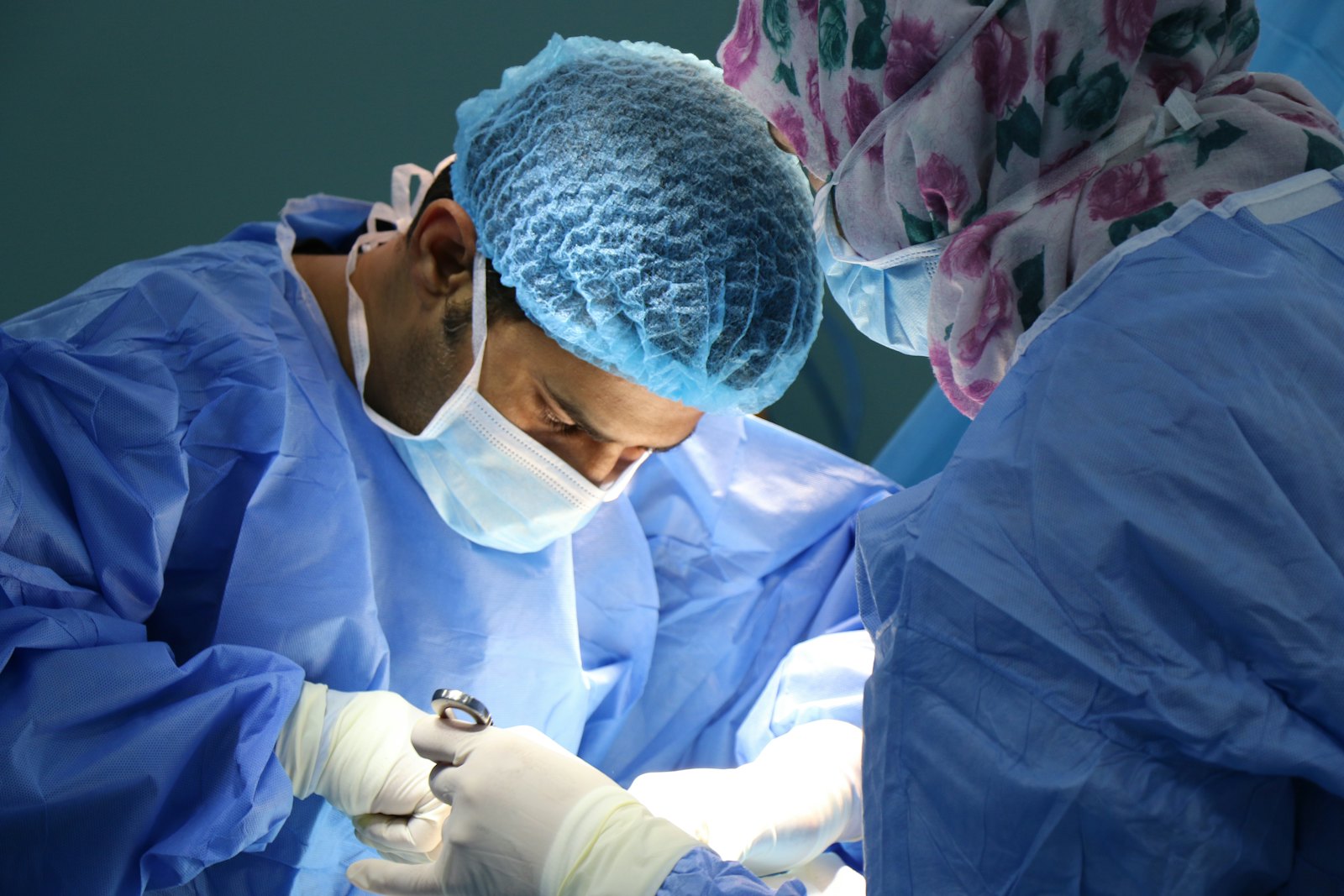
The transplant is performed as a day case, over a single 5-to-8-hour session depending on volume, under local anesthesia. You stay awake — you can chat, eat, check your phone. The session begins by designing the new hairline, confirmed with you in front of a mirror: this is a crucial step, because it determines how natural the result looks. Your age and face shape are respected to avoid a hairline that sits too low or looks too regular and would “give away” the transplant years later.
Next comes the local anesthetic (the only mildly unpleasant moment, and it’s brief), then harvesting grafts from the donor area, sorting them under a microscope, and finally implantation. Pain during surgery is virtually nil. At the end of the day, the donor area is protected and you receive precise aftercare instructions. The next morning, the first wash is done at the clinic and the team shows you how to wash on your own in the following days. You leave with hairs in place, small temporary crusts and a clear protocol.
The regrowth timeline: patience required
This is the stage many people overlook, and it causes needless worry. Here’s what actually happens.
- Weeks 1–3: crusts fall off, redness fades. The implanted hairs are still there, short.
- Weeks 3–8: the shedding phase begins: the transplanted hairs fall out. This is normal and expected — the follicle itself stays firmly anchored under the skin and enters a resting phase.
- Months 3–4: the first permanent hairs regrow, fine at first then progressively thicker.
- Months 6–9: density becomes visible and flattering; the result “shows up.”
- Months 12–18: final result, with mature, thick hair you cut and style normally.
So expect roughly a year to judge fully, and up to 18 months on the slower-growing crown. No one walks out “with a full head of hair” the next day: it’s an investment that reveals itself over time.
Beard, eyebrows and PRP
The same FUE/DHI technique can fill in a patchy beard or cover gaps (scars, bare zones) for €1,800. Grafts harvested from the back of the scalp take permanently on the face. For eyebrows (€1,600), the work is even more delicate: each hair must be implanted flat, in the direction of growth, for a natural look — useful after over-plucking, alopecia or a scar.
PRP (platelet-rich plasma) — an injection of your own growth factors drawn from a blood sample — is often offered as a complement: it won’t create hair where none remains, but it can support the vitality of existing follicles and help grafts take. It’s an adjunct, not a substitute for a transplant. Explore all our hair solutions on the dedicated hair transplant page.
Morocco or Turkey: which to choose?
Turkey popularized low-cost hair tourism, but its market has become enormous, with “graft factories” where the surgeon designs the hairline then delegates most of the work to technicians — sometimes across several patients at once. Quality exists, but it’s uneven and hard to assess from a distance.
Morocco takes a more closely supervised approach: European-trained surgeons like Dr Amine Rafik (French College of Plastic Surgery, Paris), ISO-certified AKDITAL-group clinics (Jerrada Oasis in Casablanca, AKDITALIFE in Bouskoura), follow-up in English and French, and cultural and geographic proximity to Europe. For a comparable price, you gain traceability, safety and support. See for yourself on our clinics page and how we work in how it works.
Realistic expectations, limits and maintenance
Let’s be honest: a transplant redistributes hair, it doesn’t create new hair. Your final density depends on how rich your donor area is. On very advanced balding, you achieve harmonious coverage and a frame for the face — not necessarily the head of hair you had at 20. A second session is sometimes needed to build density, especially on the crown.
Another key point: a transplant doesn’t stop balding from progressing in your native, non-transplanted hair. Many patients stay on medical treatment (finasteride, minoxidil) to preserve the rest, under medical advice. FUE/DHI risks are low but real: transient forehead swelling, small crusts, temporary numbness, rare folliculitis, and — if the operator is inexperienced — a sparse result or an unnatural hairline. Hence the importance of choosing your surgeon carefully.
Recovery and aftercare
For the first few days, you sleep semi-upright to limit swelling, avoid touching the area, and strictly follow the gentle washing protocol provided by the clinic. Never pick at the crusts — they fall off on their own. For 2 to 4 weeks, avoid intense exercise, heavy sweating, saunas, swimming pools and direct sun exposure; a loose hat is allowed per instructions. Tobacco and alcohol, which impair microcirculation, should be avoided around the procedure.
The donor area heals within a few days; the tiny extraction points become invisible once hair regrows. Our team stays reachable throughout the regrowth phase to answer your questions, month after month, until the final result.
FAQ
Is a hair transplant painful?
No. The procedure is done under local anesthesia and is painless once the area is numb. The only sensitive moment is the anesthetic injection, which lasts a few minutes. In the following days, mild discomfort and transient swelling are managed with simple painkillers.
How long do I need to stay in Morocco?
Plan on about 3 days on site: one day for the consultation and procedure, one day for the first wash and checks, then the return trip. The all-inclusive package covers the hotel, transfers and remote follow-up afterward.
Are the results permanent?
Yes. Grafts come from the crown band that is genetically resistant to DHT: once implanted and regrown, these hairs last for life. Your original, non-transplanted hair, however, may keep thinning — which is why maintenance treatment is worth considering.
When will I see the final result?
The first hairs regrow around 3–4 months, density becomes visible around 6–9 months, and the final result is judged at 12 months (up to 18 on the crown). Patience is essential, because a shedding phase happens first, around weeks 3–8.
Women, beard, eyebrows: is it possible?
Yes for the beard (€1,800) and eyebrows (€1,600), with the same technique. In women, a transplant is possible if the donor area is stable and the loss isn’t diffuse; a prior assessment is needed, as some types of female hair loss aren’t suited to surgery.
How many grafts do I need?
It depends on the surface and target density: 2,500–2,700 for temples, up to 5,000–5,500 for advanced balding. Our surgeons estimate this from your photos during the free quote.
Unsure about the technique or graft count? Send us a few photos of your scalp and receive a free, personalized quote within 24 hours, including our surgeons’ honest opinion on what’s achievable in your case. Request your free quote today — and read our complete guide to cosmetic surgery in Morocco to understand everything before you decide.